Posts

Showing posts with the label applied behavior analysis therapy

How can the ABA therapy program help kids with autism?

Image
    Applied Behavior Analysis therapy involves many techniques for understanding and changing behavior. ABA is a flexible treatment: It can be adapted to meet the needs of each unique individual Teaches skills that are useful in everyday life It can be provided in many different locations – at home, at school, and in the community Can involve one-to-one teaching or group instruction Positive Reinforcement Positive reinforcement is one of the main strategies to be used in Applied Behavior Analysis. When a behavior is followed by something that is valued or given a reward, then the behavior is likely to be repeated and over time encourage positive change. Positive reinforcement is considered one of the main strategies used in ABA. The first step is to recognize a goal behavior. Every time the person uses a behavior or a skill successfully, they are given a reward. The reward is always meaningful to the individual like praises, toys, books, access to the playground, or ...

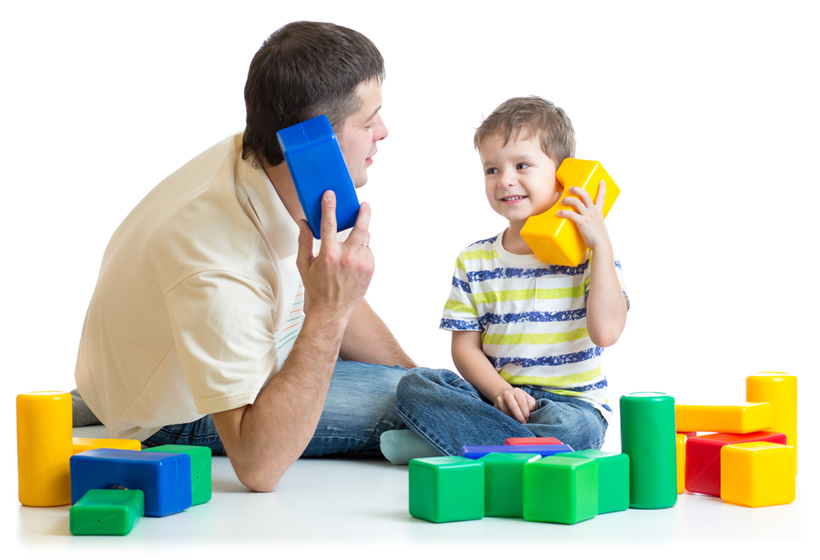
Are you aware of the four basic functions of behaviors in autism?

Image
A behavior that a person engages in repeatedly will typically serve some kind of purpose or function for them (O’Neill, et al, 1997). In applied behavior analysis therapy (ABA), the experts have found that all behavior can be reasoned. And, as per the studies, there are four basic functions that have been identified of which only the three are mostly talked about. The fourth one, technically which is referred to as the automatic negative reinforcement is discussed much less. In autism behavioral therapy , studying these four functions of behavior is necessary to identify why a person is continuing to engage in a certain belief, pattern or purpose. This is essentially the assumption that there is a rationale for a behavior's occurrence. It might be difficult to comprehend why an adult or kid engages in a behavior, especially if it is negative such as violence or self-injury, but understanding the underlying purpose can help. At the same time, behavior might serve multiple purposes....

Developing Early Communication Skills in Children with Autism

Image
Children with autism communicate in a unique way. Applied behavior analysis therapy can be beneficial for them. Parents have a natural desire to understand their children's needs and desires. Our children, like all of us, want to be understood. As a result, one of the most difficult aspects of autism is the development of early communication skills in children. Most common questions asked by parents with autistic kids Question 1 - How Do I Teach Communication Skills to My Autistic Child? Answer - Repetitive or stiff vocabulary, narrow interests, uneven language development, and poor nonverbal communication abilities define the speech of children with autism. As parents, we must interpret our children's distinct ways of expressing themselves while simultaneously teaching them more effective communication methods. With effective ABA therapy, skilled support staff, and patient family members, children with autism improve their early communication abilities step by step. Early Co...

What are the different types of ABA strategies?

Image
On a daily basis, children with autism face a wide range of challenges. In terms of specificity and degree, these conflicts differ from child to child. Speech, language, and communication are some of the difficulties that children with autism face. This means that some children may struggle to hold a conversation, while others may only say a few words or be completely nonverbal. If your child has trouble talking, ABA therapy , also known as applied behavior analysis therapy, may help. ABA is a type of autism therapy that focuses on reinforcing acceptable behaviors while discouraging undesirable ones. You can ask the therapists of applied behavior analysis near Los Angeles to do this who will use incentives to enhance communication, language, and other abilities in autistic kids. ABA comes in a variety of forms, depending on the patient's age and therapeutic goals. Dr. Ivar Lovaas, a psychologist, developed it in the 1960s, but the approaches have changed through time. The differen...

Benefits of Applied Behavior Analysis therapy

Image
Applied Behavior Analysis (ABA) therapy is an analysis wherein the learning patterns are analyzed to modify behavioral patterns. This analysis is done for special education or for children with autism spectrum disorder (ASD). ABA is widely accepted as the scientific way to treat behavioral issues.   What are the benefits of Applied Behavior Analysis therapy? ABA works wonders: It is the only analysis that is scientifically proven and works its magic on children. No other treatment is as effective for ASD as ABA. ABA makes children social: With this analysis, the children become responsive and find making friends easy. They interact with more people and in the long run become friendly with them. ABA helps children to accept their condition: This analysis makes children aware of their condition and helps them in accepting the situation in a better manner. They learn to accept the realities of the world and learn to live with it. ABA helps parents in learning parenting better: ABA h...

Find out if applied behavior therapy is required for your child

Image
Applied Behavior Analysis (ABA) is the systematic application of psychological concepts of learning theory to change behavior. Special education and the treatment of autism spectrum disorder (ASD) are two of the most common applications, but it's also utilized in healthcare, animal training, and even business. ABA is largely acknowledged as the only scientifically valid treatment for behavioral difficulties related with ASD. Applied behavior analysis therapy is widely regarded as the gold-standard treatment for children with autism spectrum disorder (ASD) or other developmental disorders, according to many specialists. However, it's also used to treat a variety of other ailments, including: a substance abuse problem dementia After a brain injury, there is cognitive impairment. Anxiety and related disorders such as panic disorder, obsessive-compulsive disorder (OCD), and phobias, as well as rage difficulties Personality problem on the edge How does it work? If you are looking f...